A manifesto for embracing LIFE
originally published in the OPIA Community Magazine Vol. 1: Embrace the Dirt
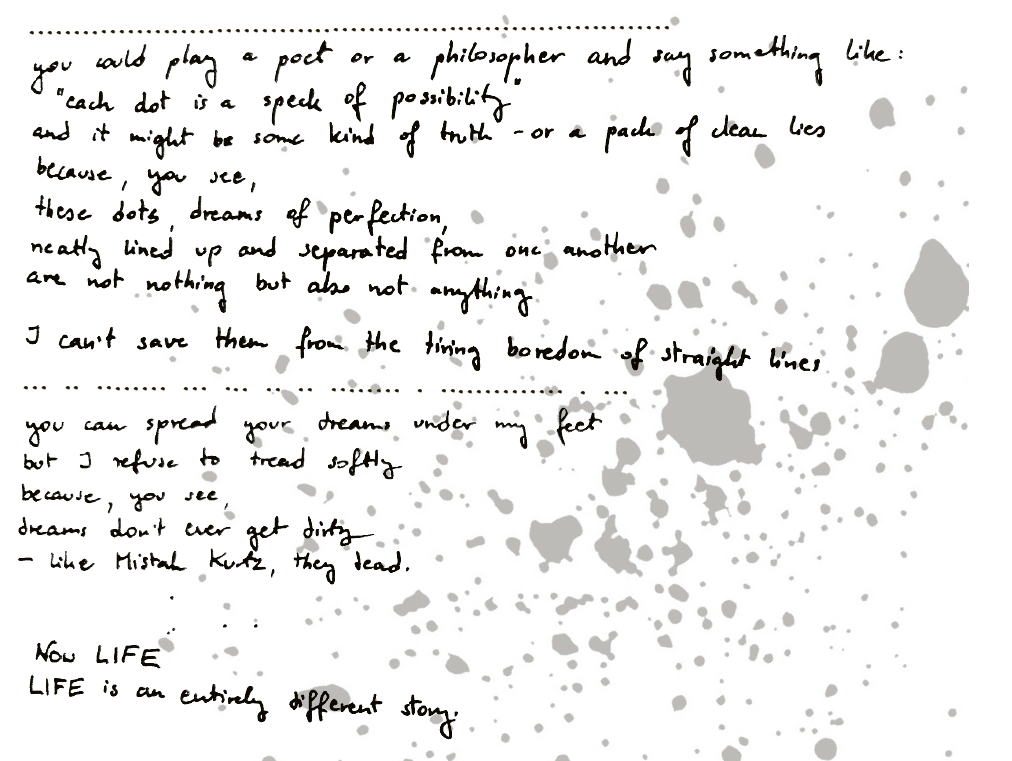
When I was young, I wanted to be an Artist. With a capital A. To be admired and mysterious… I wanted to be Great. This, for my adolescent brain, meant only one thing: I needed to be Perfect. I thought, if I’m Perfect, they’re finally gonna love me. If I’m Perfect, I’ll finally be worthy of being alive.
I tried different things, but there was little joy in them. Things came easy to me at first, but there always came a point where I got sad. It was all useless. I couldn’t play the Perfect melodies. I couldn’t draw the Perfect lines. I wasn’t able to sing Perfect notes, with a Perfect voice. I dropped things almost as fast as I picked them up.
I kept doing some; only to judge myself for being SHIT at what I do. Not perfect. Not worthy. I would never allow myself to play with the process, to enjoy making mistakes, to be curious about different outcomes without taking it personally. I was to be Perfect or not be at all. So, I never actually learned anything.
I remember that young, serious, miserable girl now with a smile of sympathy. She didn’t know any better. She hadn’t been able to receive Love that wasn’t conditioned on anything.
She could never give that Love to herself.
Perfect or dead.
So she stayed dead – to herself, to the world.
And LIFE in her wept, silently.
This girl still lives within me. Presently, she complains about the words I have chosen to tell her story. She tells me I haven’t done it beautifully enough, at which, I give her a tender hug. It’s okay, I say. The words are what they want to be. No matter what happens, I love you.
I let her watch when I dance, or when I take out my brushes and paint. I let her listen when I make music. I let her witness all my unintentional paint splashes, dissonances, and glorious failures. There are moments when she is outspoken about what I do. But sometimes, she falls silent. In those moments when I let go of my own thoughts, concepts and judgements, and let the work work me, when I let go of control and let it emerge as it is, when I let my sensing body move with the flow only it can know; when I let the LIFE flow through me and express itself the way it wants to. Then, I can sense her smile. I open to receive her. I let her feel what I feel. I sense the fire that abides in my heart and in every cell of my body growing brighter. There is place for her here. She stretches her hands out to the warmth. Finally, she can receive the love the world has always offered her. Finally, she is alive. Not of my hands, but by my hands, the river of LIFE and love flows through, healing us both. And she can enter that river with me. Out feet sink deep into the muddy riverbed, and we both exclaim in awe of the fresh lively current and the touch of the dirt on our ankles.
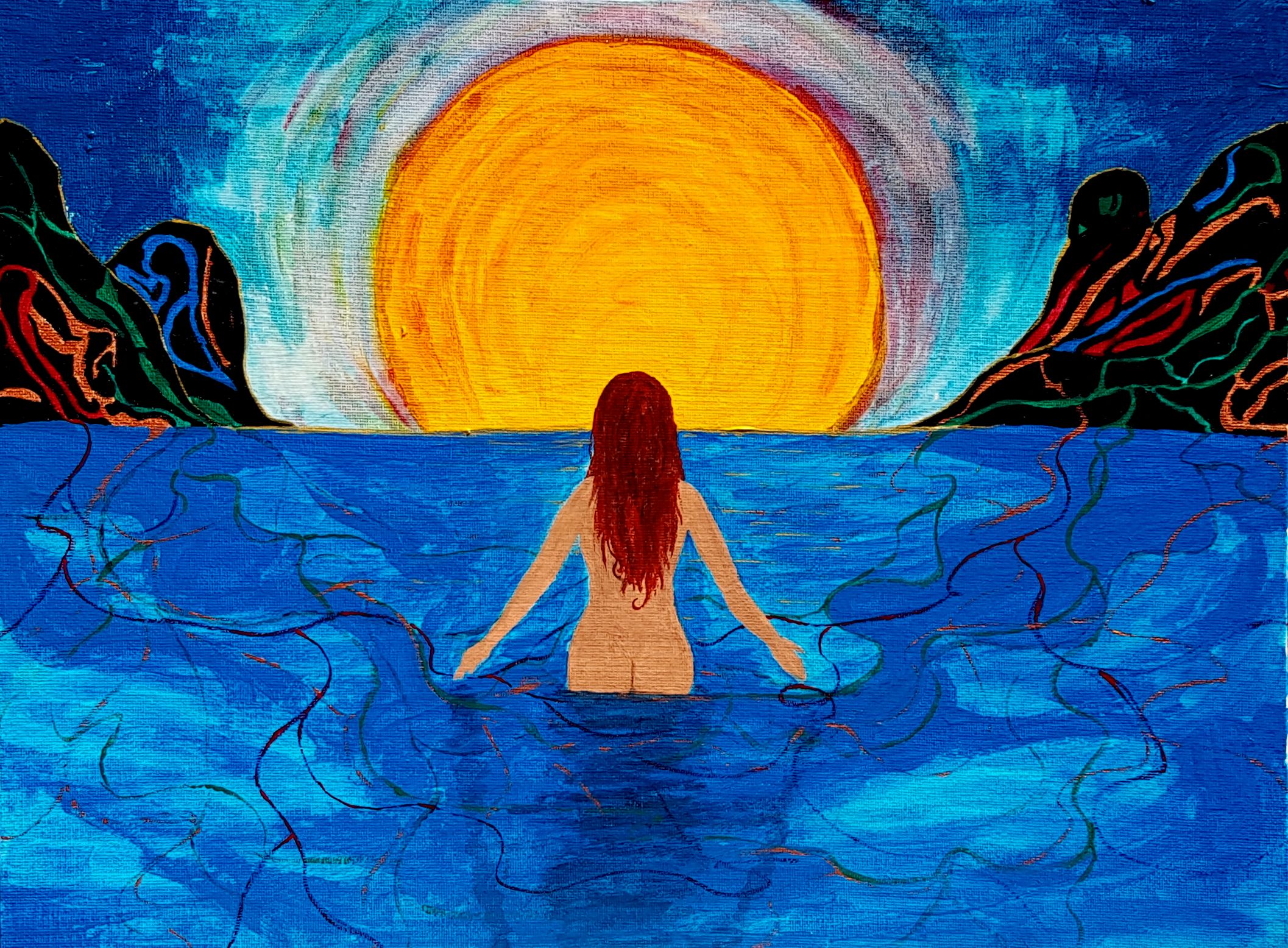
We are all born of that river – but so quickly we forget what it’s like. Some of us never find it again. Others wait decades to remember it. And the first time you experience that river again is always unexpected. It isn’t gentle. Something, someone, pushes you into the current. You dive deep, and suddenly there is no ground under your feet. Nothing to hold on to. To your unexpecting skin, the water feels so cold it takes your breath away. Everything you think you are is being taken away from you. Your feet are kicking, you’re gasping for air, frantically looking for something to hold on to; some kind of control. Yet there is none…
You cannot fight the river. You can run from it to the shore and never go back; you can keep struggling and drown in it – or you can stop fighting and give in to the flow.
And suddenly, the water is not cold anymore. The current is still strong, but it doesn’t appear vicious any longer. Deep within it, in the undertow, the warmth of LIFE glows, like burning coals.
You have been waiting for it all your life.
Just as long as it has been waiting for you.
Wilfully surrendering to this flow is the foundation for genuine, honest art – whether we’re making tea, conversation, tables, poetry, or music.
But it requires giving up our definitions of Perfect; yielding all our opinions and assumptions about reality, our little fenced-in world that we build for us to feel safe in.
It means giving up our need for control, and listening.
Listening.
To the LIFE in you.
Between one heartbeat and another…
Between one breath and the next…
A call: Come, come and dance.
LIFE is basically playful. There is no apparent reason or necessity for it. It doesn’t have a purpose or destination. As Alan Watts once said, existence is best understood compared to music: you don’t work the piano, you play the piano. It’s not about getting it over with. It’s about what happens in between.
Perfectionism is about denying LIFE. It’s about constant judgement. It’s rejecting what is and wishing it to be different. In that, it is the ultimate death; not death as a part of LIFE, but a complete separation from it. It’s refusing to be a part of this world, to be touched by the world.
It’s refusing to accept that just like in a tree, a rock, or a wild animal, there is no aesthetic fault in us.
Perfectionism is putting our reasons over the reasonless playfulness of LIFE.
It’s refusing to be loved.
Because the river of LIFE is the essence of love: reckless, burning love, not confined to a person, but as a way of being. In every cell of our body.
Getting on with the flow of LIFE is giving up dreams of Perfection and living down to the person we already are. It’s seeing behind our judgementalism to the wonder of LIFE we are, in our breathing body. It’s letting LIFE express itself through you.
It’s the ultimate act of love.
Both towards that little girl in you, weeping and lonely – and towards everything else that ever was, is, and will be.
So dance. Not for anybody, not with anybody, not for any reason, except for because you are alive now and you CAN.
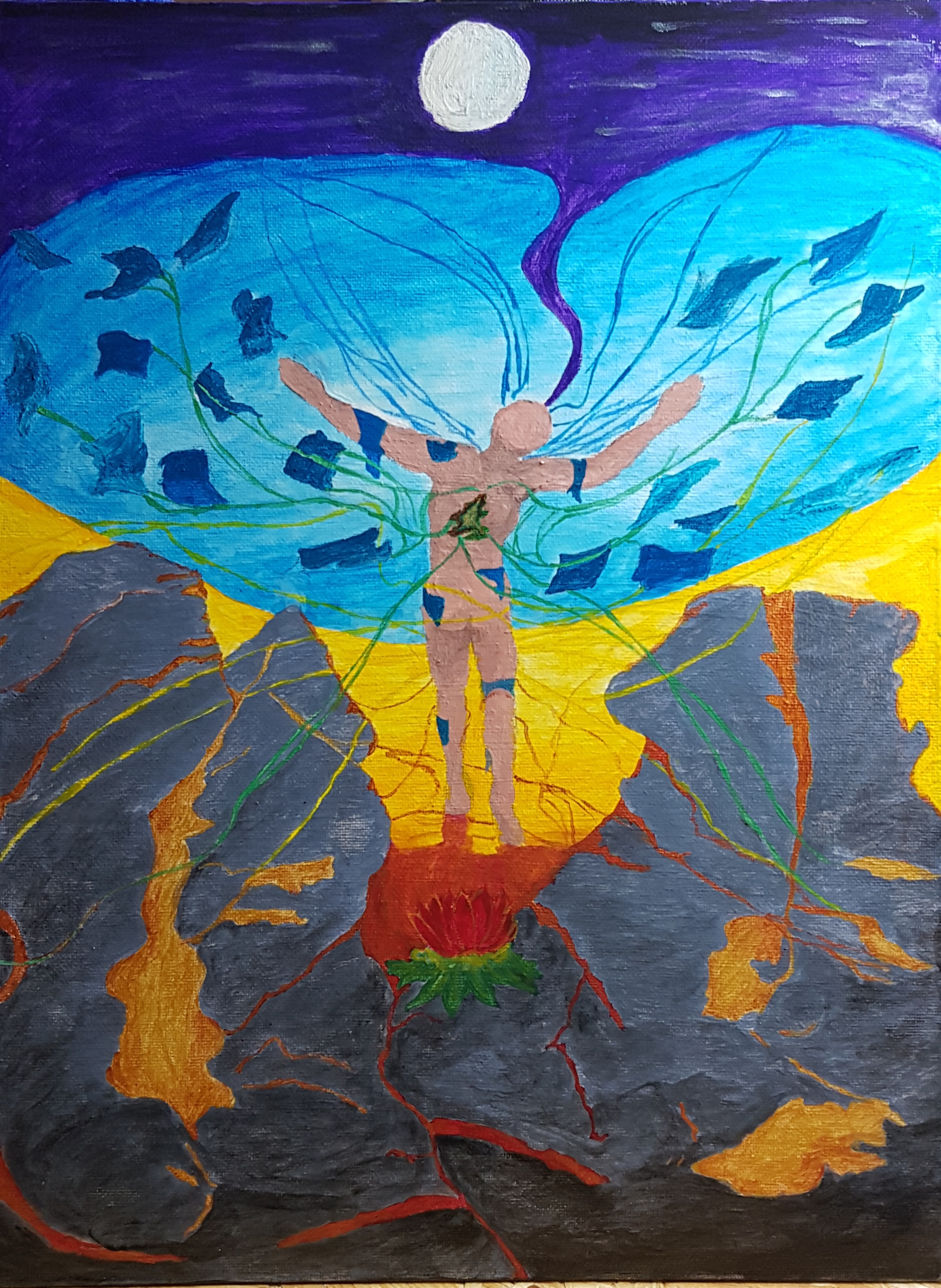
not wishing for the cloths of heaven
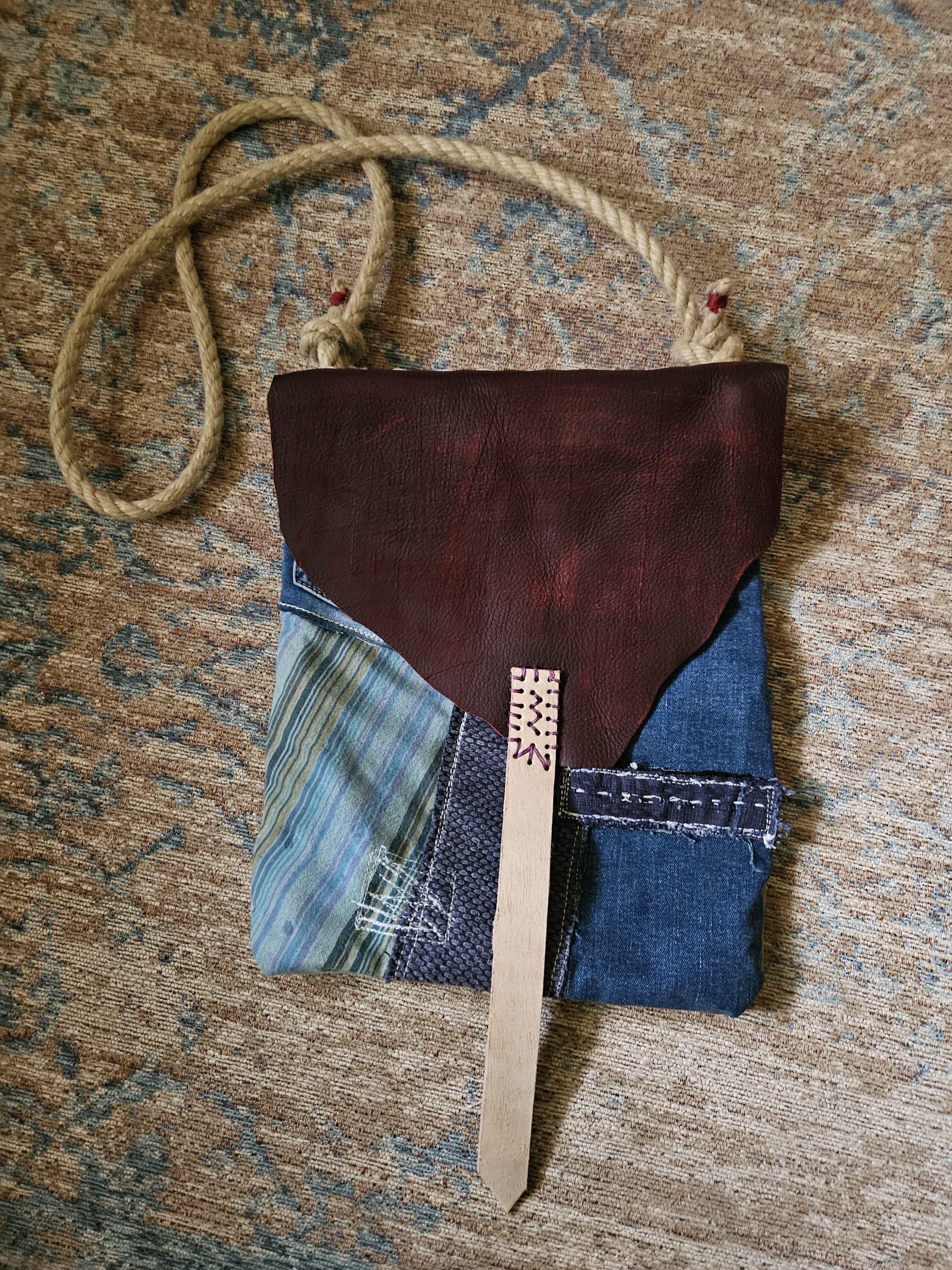
Before I ever set the first dot of this essay down, I intended to write an essay on boro and how I learned to sew, and embrace the dirt in sewing, while making a boro bag out of recycled jeans, scraps of garment and leather.
But the text took a life of its own and decided to be about something else.
Or not?
Boro (ぼろ) derives from Japanese boroboro, “something tattered or repaired”. As a practice, it originates from Japanese peasants who couldn’t afford to buy cloth, so they grew, spun, dyed and wove fabric for their clothing themselves. Out of scarcity, the materials were repeatedly reused, repaired, and rewoven, using spare fabric scraps. In many cases, the usage of repaired clothing lasted for several generations, leading to garments eventually resembling a complex and multilayered patchwork spanning decades of mending; laying bare the history of its use.
Boro exemplifies the idea of wabi-sabi (侘寂), which is about accepting impermanence and imperfection as a part of life. Wabi-sabi aesthetics express a beauty that is flawed, fleeting, and incomplete; rough but practical, simple but intimate – a beauty hidden in the cracks. It is about acknowledging three simple realities: nothing lasts, nothing is finished, and nothing is perfect.
As Japan moved towards modernisation and the life conditions improved, most boro pieces were discarded as an embarrassing reminder of poverty.
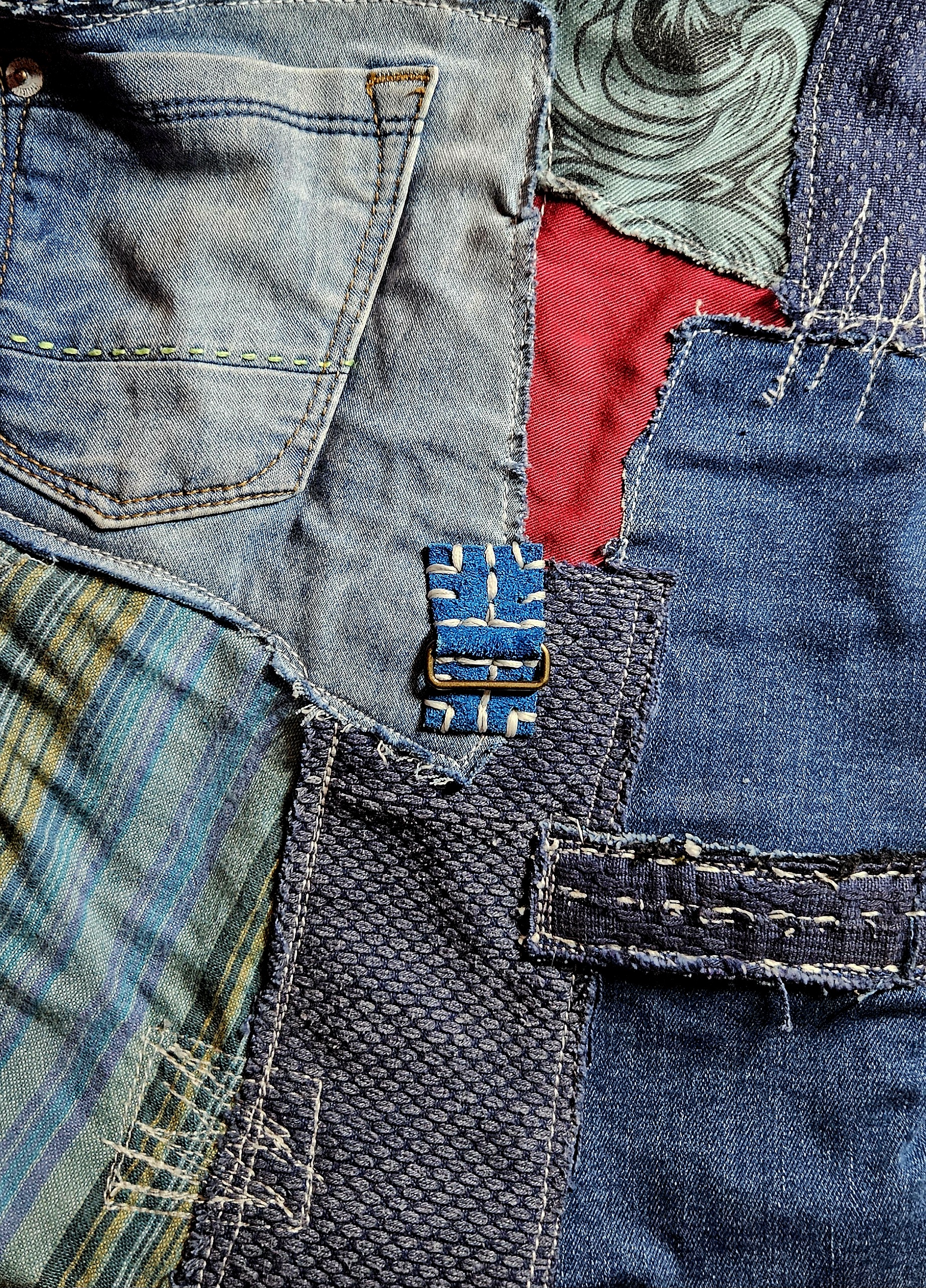
 wild growing sky
Leave a comment